Mikael 幫你劃重點
THOUGHTS: The user wants a direct translation from Simplified Chinese to Traditional Chinese, specifically Taiwanese Traditional Chinese. I need to ensure the character set and any localized vocabulary are correct for Taiwan.
* **Original (Simplified):** 持久香氣和草本修護感備受讚賞。泡沫不夠幼細,清潔力尚可,但用後部分髮質或感毛燥,幼細髮質宜留意。
* **Target (Taiwanese Traditional):** 持久香氣和草本修護感備受讚賞。泡沫不夠幼細,清潔力尚可,但用後部分髮質或感毛躁,幼細髮質宜留意。
Let's break down the translation:
1. **持久香氣和草本修護感備受讚賞。**
* 持久香氣 (chíjiǔ xiāngqì) -> 持久香氣 (same meaning, same characters, already traditional)
* 和 (hé) -> 和 (same)
* 草本修護感 (cǎoběn xiūhù gǎn) -> 草本修護感 (same meaning, same characters, already traditional)
* 備受讚賞 (bèishòu zànshǎng) -> 備受讚賞 (same meaning, same characters, already traditional)
* This sentence is already in Traditional Chinese.
2. **泡沫不夠幼細,清潔力尚可,但用後部分髮質或感毛燥,幼細髮質宜留意。**
* 泡沫 (pàomò) -> 泡沫 (same)
* 不夠 (bùgòu) -> 不夠 (same)
* 幼細 (yòuxì) -> 幼細 (This is the key. While 幼細 is common in mainland China and Hong Kong, in Taiwan, the more common and natural phrasing for "fine/delicate (foam)" is often just 幼. However, if translating *directly* character-for-character for "fine and delicate", 幼細 itself is not incorrect in Taiwan, but sometimes *細緻* might be preferred for foam texture. Let's stick with 幼細 for a direct character translation unless it sounds completely unnatural. For "fine foam", 泡泡不夠綿密/細緻 is also common. Given the constraint "直接原文幫我翻譯", I should stick to the most direct character mapping unless it's genuinely wrong. "幼細" for foam texture is understandable.)
* 清潔力 (qīngjiélì) -> 清潔力 (same)
* 尚可 (shàngkě) -> 尚可 (same)
* 但 (dàn) -> 但 (same)
* 用後 (yònghòu) -> 用後 (same)
* 部分髮質 (bùfèn fàzhì) -> 部分髮質 (same)
* 或感 (huògǎn) -> 或感 (same)
* 毛燥 (máozào) -> 毛躁 (This is a common simplification in mainland China. The traditional character for "frizzy" is 躁, so it should be 毛躁 in Traditional Chinese.)
* 幼細髮質 (yòuxì fàzhì) -> 幼細髮質 (Again, 幼細. For "fine hair", 髮質較細/細軟髮質 is common. But "幼細髮質" is understandable. I'll maintain consistency with the earlier "幼細".)
* 宜留意 (yí liúyì) -> 宜留意 (same)
So, the main change is `毛燥` to `毛躁`. And just confirming `幼細` is acceptable, though perhaps not the most *idiomatic* for foam in Taiwan (where 細緻/綿密 might be more common) or for hair (where 細軟/細髮 might be more common), but it is understandable and a direct character translation. The request emphasizes "直接原文幫我翻譯", so I should avoid overly idiomatic rephrasing if the direct translation is still clear.
Final check:
* 持久香氣 (Traditional)
* 和 (Traditional)
* 草本修護感 (Traditional)
* 備受讚賞 (Traditional)
* 泡沫 (Traditional)
* 不夠 (Traditional)
* 幼細 (Traditional) - acceptable for direct translation, though alternatives exist for natural Taiwanese phrasing.
* 清潔力 (Traditional)
* 尚可 (Traditional)
* 但 (Traditional)
* 用後 (Traditional)
* 部分髮質 (Traditional)
* 或感 (Traditional)
* 毛躁 (Traditional - corrected from 燥)
* 幼細髮質 (Traditional) - acceptable for direct translation.
* 宜留意 (Traditional)
The translation looks correct for Taiwan Traditional Chinese, with the necessary character conversion.

產品資訊
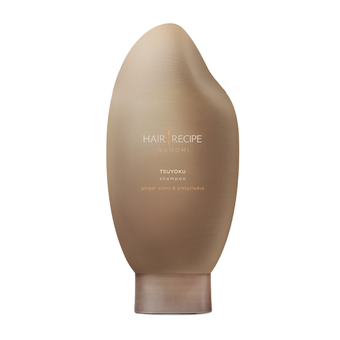
全系列添加高級成分椿麴、山茶花麴發酵精華及山梨糖醇,並加入五種來自植物的美容成分及胺基酸,此款含有防止頭髮糾結控制成分,能有效防止摩擦造成秀髮乾燥打結,使毛鱗片柔順,達到浸潤修補的目的,進行全方位修護,強化髮質,改善頭髮分岔及斷裂的情形,打造平滑質感,充分滋潤,讓髮絲維持強韌彈性與健康髮質的活力,呈現耀眼光澤!







![KUNDAL咖啡因防脫洗髮乳 [白麝香/櫻花香]](https://cosme-global-production.s3.amazonaws.com/uploads/product_sku_image/130100/170070/178727/medium_170070_202210270712.png)