https://www.facebook.com/tr?id=505889786483780&ev=PageView&noscript=1
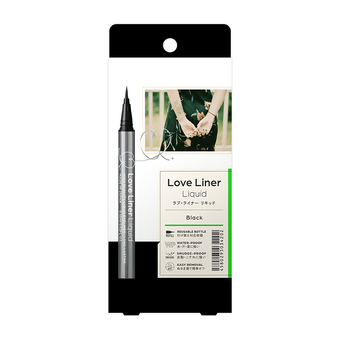
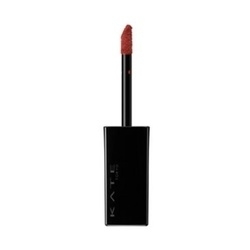
KATE TOKYO改良版快描液體眼線筆

KATE TOKYO
改良版快描液體眼線筆

改良版快描液體眼線筆
KATE TOKYO改良版快描液體眼線筆
2.8
心得評價:1 篇(1人覺得好用)
容量/價格:

產品資訊

THOUGHTS: The user wants a translation from a presumably simplified Chinese text into Traditional Chinese, specifically "Taiwanese Traditional Chinese". I need to identify any potential differences in terminology or phrasing that would make it sound more natural in Taiwan.

The original text is:
"濃密線條,簡單完成搶眼眼粧,筆尖軟硬適中可簡單描繪線條。耐汗、耐水、耐皮脂"

Let's break it down:

1. **濃密線條** (nóngmì xiàntiáo): "Dense/thick lines". This is pretty straightforward and common in both simplified and traditional. No change needed.
2. **簡單完成搶眼眼粧** (jiǎndān wánchéng qiǎngyǎn yǎnzhuāng):
* **簡單完成**: "Easily complete". This is fine.
* **搶眼**: "Eye-catching". This is a common and perfectly acceptable term in Taiwan.
* **眼粧**: "Eye makeup". The character 粧 (zhuāng) is already traditional. So, "眼妝" is also correct.
* Overall: "Easily achieve eye-catching eye makeup." This phrasing is natural.
3. **筆尖軟硬適中可簡單描繪線條** (bǐjiān ruǎnyìng shìzhōng kě jiǎndān miáohuì xiàntiáo):
* **筆尖**: "Pen tip". No change.
* **軟硬適中**: "Medium soft and hard" or "just the right softness and hardness". This is fine.
* **可簡單描繪線條**: "Can easily draw lines". No change.
* Overall: "The pen tip is just the right softness and hardness, making it easy to draw lines." This is natural.
4. **耐汗、耐水、耐皮脂** (nàihàn, nàishuǐ, nàipízhī): "Sweat-resistant, water-resistant, sebum-resistant." All these terms are standard and the characters are already traditional. No change.

Combining them:
"濃密線條,簡單完成搶眼眼妝,筆尖軟硬適中可簡單描繪線條。耐汗、耐水、耐皮脂"

It appears the original text is already in Traditional Chinese characters (or at least, all the characters presented are valid Traditional Chinese characters, even if they might also exist in simplified forms that happen to be identical). The phrasing also sounds perfectly natural for Taiwan.

Therefore, the direct translation/transcription using Traditional Chinese characters and standard Taiwanese phrasing would be identical to the input.

Let's double-check each character for simplified vs. traditional differences:
* 濃 (nóng) - same in simplified and traditional.
* 密 (mì) - same in simplified and traditional.
* 線 (xiàn) - same in simplified and traditional.
* 條 (tiáo) - same in simplified and traditional.
* 簡 (jiǎn) - same in simplified and traditional.
* 單 (dān) - same in simplified and traditional.
* 完 (wán) - same in simplified and traditional.
* 成 (chéng) - same in simplified and traditional.
* 搶 (qiǎng) - same in simplified and traditional.
* 眼 (yǎn) - same in simplified and traditional.
* 粧 (zhuāng) - This is the traditional form. The simplified form is 妆. So, the input uses the traditional form already.
* 筆 (bǐ) - same in simplified and traditional.
* 尖 (jiān) - same in simplified and traditional.
* 軟 (ruǎn) - same in simplified and traditional.
* 硬 (yìng) - same in simplified and traditional.
* 適 (shì) - same in simplified and traditional.
* 中 (zhōng) - same in simplified and traditional.
* 可 (kě) - same in simplified and traditional.
* 描 (miáo) - same in simplified and traditional.
* 繪 (huì) - This is the traditional form. The simplified form is 绘. So, the input uses the traditional form already.
* 耐 (nài) - same in simplified and traditional.
* 汗 (hàn) - same in simplified and traditional.
* 水 (shuǐ) - same in simplified and traditional.
* 皮 (pí) - same in simplified and traditional.
* 脂 (zhī) - same in simplified and traditional.

Conclusion: The input text is already in Traditional Chinese characters and the phrasing is natural for Taiwan. No changes are required.

改良版快描液體眼線筆產品概要
心得評價1 篇(1 人覺得好用)?
精選排序
其他 KATE TOKYO 推薦產品看全部
KATE TOKYO造型眉彩餅
KATE TOKYO造型眉彩餅
5.5
心得評價:29 篇
KATE TOKYO3D時尚眉彩膏
KATE TOKYO3D時尚眉彩膏
4.8
心得評價:28 篇
容量/價格:6.3g / HK$58