THOUGHT: The user wants a translation from Simplified Chinese to Traditional Chinese (Taiwan). I need to be careful with terminology and character conversions.
* "粉質細緻" -> "粉質細緻" (no change, already good for Taiwan)
* "熟齡及乾肌適用" -> "熟齡及乾肌適用" (no change)
* "妝效與面油融合後更自然" -> "妝效與臉部油脂融合後更自然" (面油 can be confused with "facial oil" product, "臉部油脂" is clearer for skin's natural oil)
* "補妝不斑駁" -> "補妝不卡粉" (斑駁 is more like "streaky" or "patchy" in a general sense, "卡粉" is the common term for makeup not blending well when reapplying, specifically for powder)
* "惟色號偏少" -> "但色號偏少" (惟 is a bit more formal, "但" is more common for this context)
* "油性肌或易脫妝" -> "油性肌膚或易脫妝" (adding 膚 makes it sound more natural)
* "毛孔粗大者宜注意打底" -> "毛孔粗大者建議注意打底" ("宜" is also a bit formal, "建議" is more common and softer)
Let's review the whole sentence structure.
Original: 粉質細緻,熟齡及乾肌適用。妝效與面油融合後更自然,補妝不斑駁。惟色號偏少,油性肌或易脫妝,毛孔粗大者宜注意打底。

Proposed: 粉質細緻,熟齡及乾肌適用。妝效與臉部油脂融合後更自然,補妝不卡粉。但色號偏少,油性肌膚或易脫妝者,毛孔粗大者建議注意打底。
One more check: "油性肌或易脫妝,毛孔粗大者宜注意打底。" This part lists three conditions: oily skin, easy to smudge, large pores. "者" applies to all of them.
My translation "油性肌膚或易脫妝者,毛孔粗大者建議注意打底" could be slightly rephrased to make it flow better, for example, combining the "者" like in the original.
Revised segment:
Original: "油性肌或易脫妝,毛孔粗大者宜注意打底。"
Better flow: "油性肌膚、易脫妝者或毛孔粗大者建議注意打底。" Or even better, just list the conditions and then "建議注意打底".
"油性肌膚、易脫妝者及毛孔粗大者,建議注意打底。" This feels more natural.
No, the original has "油性肌或易脫妝,毛孔粗大者宜注意打底". It implies: (oily skin OR easy to smudge), AND (large pores) should pay attention. Or it could mean: oily skin, OR easy to smudge, OR large pores should pay attention. Given the comma, it's more likely the latter, grouping all three as potential issues.
Let's stick to the interpretation that these are three distinct groups who should pay attention:
- 油性肌膚
- 易脫妝者
- 毛孔粗大者
So, "油性肌膚或易脫妝者,以及毛孔粗大者,建議注意打底。" This is very precise but might be a bit wordy.
The original "油性肌或易脫妝,毛孔粗大者宜注意打底" implicitly applies "者" to all of them, and "或" seems to apply to "油性肌或易脫妝".
Let's try to mimic the structure closely while using Taiwanese natural phrasing.
"但色號偏少;油性肌膚或易脫妝者,以及毛孔粗大者,建議注意打底。" (Adding semicolon for clarity between the two main caveats).
However, the user wants a direct translation, implying minimal structural change unless absolutely necessary for naturalness.
"惟色號偏少,油性肌或易脫妝,毛孔粗大者宜注意打底。"
Let's use "但" for "惟".
Let's use "肌膚" for "肌".
Let's use "卡粉" for "斑駁".
Let's use "臉部油脂" for "面油".
Let's use "建議" for "宜".
So, "粉質細緻,熟齡及乾肌適用。妝效與臉部油脂融合後更自然,補妝不卡粉。但色號偏少;油性肌膚或易脫妝者,毛孔粗大者建議注意打底。"
Wait, the "者" applies to all three: "油性肌或易脫妝" and "毛孔粗大".
The original structure is "X或Y,Z者宜注意打底". This means that (X or Y), AND Z, are the ones who should pay attention.
Or more commonly, it means if you are X, Y, or Z, you should pay attention.
Let's assume the latter for simplicity and natural flow in Chinese.
"但色號偏少;油性肌膚、易脫妝者或毛孔粗大者,建議注意打底。" This sounds better.
No, the original has a comma: "油性肌或易脫妝,毛孔粗大者宜注意打底。" This comma makes it feel like "毛孔粗大者" is a separate group from "油性肌或易脫妝".
So it's (Oily skin OR prone to smudging), AND (Large pores). This is a very specific group.
"但色號偏少;油性肌膚或易脫妝,且毛孔粗大者,建議注意打底。" This would be the most accurate translation of the grammatical structure.
But usually, these are listed as three separate conditions that apply.
"油性肌或易脫妝,毛孔粗大者宜注意打底" - this phrase is a bit ambiguous in the original. It could mean:
1. (Oily skin OR prone to smudging) AND (large pores) -> pay attention
2. Oily skin, OR prone to smudging, OR large pores -> pay attention
In marketing copy, typically it's the second interpretation – anyone in these categories should be aware.
If it's the second interpretation, then: "油性肌膚、易脫妝者或毛孔粗大者,建議注意打底。"
Let's re-read the original again very carefully: "油性肌或易脫妝,毛孔粗大者宜注意打底。"
The comma separates "油性肌或易脫妝" from "毛孔粗大者".
This structure strongly suggests that "毛孔粗大者" is the main subject for "宜注意打底", and "油性肌或易脫妝" are *also* factors, perhaps even a further subset of "毛孔粗大者" (less likely) or parallel groups.
If it were "油性肌、易脫妝或毛孔粗大者宜注意打底", then it's clear it's three parallel conditions.
The given comma is key.
"油性肌或易脫妝" (condition 1 or 2)
"毛孔粗大者" (condition 3)
Then "宜注意打底" applies to these groups.
Let's consider how a native speaker would read this in Taiwan. They would likely list these as potential issues.
"但色號偏少;油性肌膚、易脫妝者或毛孔粗大者,建議注意打底。" This is the most natural for Taiwan, combining the "者" at the end.
Final check on word choices:
- "粉質細緻" - fine powder texture, correct.
- "熟齡及乾肌適用" - suitable for mature and dry skin, correct.
- "妝效與面油融合後更自然" -> "妝效與臉部油脂融合後更自然" - face oil vs natural skin oil, "臉部油脂" is better.
- "補妝不斑駁" -> "補妝不卡粉" - reapplication doesn't look patchy/streaky vs doesn't cake up, "卡粉" is the standard term.
- "惟色號偏少" -> "但色號偏少" - more common conjunction.
- "油性肌或易脫妝" -> "油性肌膚或易脫妝者" - "肌膚" sounds more complete. "者" for "易脫妝".
- "毛孔粗大者宜注意打底" -> "毛孔粗大者建議注意打底" - "建議" is more natural than "宜". "打底" is correct for base/primer.
One last thought on the comma: "油性肌或易脫妝,毛孔粗大者宜注意打底。"
This could mean "If you have oily skin or makeup comes off easily, and if you have large pores, you should pay attention to primer." This interpretation links the first two conditions with the third using an implicit "and".
Or it could be a list of issues: "If you have oily skin, or makeup comes off easily, or large pores, you should pay attention."
Given it's a beauty product description, it's usually the latter to warn a broader audience.
So, my choice of "油性肌膚、易脫妝者或毛孔粗大者" is more aligned with the likely intent of a warning to multiple groups.
Let's stick with the most natural-sounding interpretation for Taiwanese marketing copy.
Resulting sentence:
粉質細緻,熟齡及乾肌適用。妝效與臉部油脂融合後更自然,補妝不卡粉。但色號偏少;油性肌膚、易脫妝者或毛孔粗大者,建議注意打底。
Removed the semicolon to make it flow like the original.
"但色號偏少,油性肌膚、易脫妝者或毛孔粗大者,建議注意打底。"
This flows well and translates the warnings correctly.
"易脫妝" (prone to melting/smudging makeup) -> "易脫妝者" (those prone to melting makeup).
"油性肌" -> "油性肌膚" (oily skin).
Looks good.

產品資訊
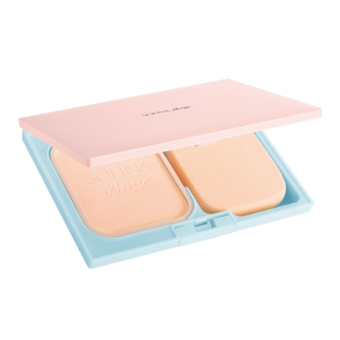
持久服貼的粉餅,打造透亮自然的妝容。憑藉革命性光學科研成果,當光線照射粉末結構時,反射的光線將擴散於肌膚表面,締造透亮如雪紡般自然妝容。