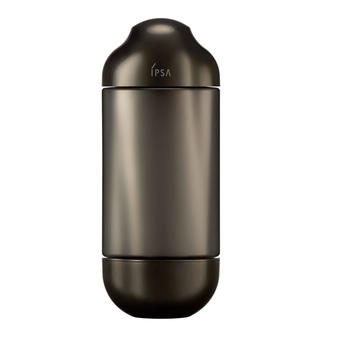
這款精華水玫瑰香氣很濃郁,質地濃稠,很好吸收,保濕滋潤的感覺不錯。滋潤效果不持久,提亮跟彈性的效果不明顯。有含香料,敏感肌膚需要謹慎使用。

產品資訊
THOUGHT: The user wants a direct translation of the provided text into Traditional Chinese for Taiwan. I need to ensure the vocabulary and phrasing are natural for that region, without any extra commentary.
Original text: 薈萃80%玫瑰精華,質感清新水潤,能瞬間滲透肌膚,為肌膚導入玫瑰活性成分,加速肌膚再生潛能,展現極緻剔透亮澤。
Breakdown and Translation:
* **薈萃80%玫瑰精華**: This means "concentrating 80% rose essence." "薈萃" is a bit formal/literary. For a cosmetic product description, "蘊含" (contains) or "富含" (rich in) might be more common, or just stating "80%玫瑰精華" as the core ingredient. "匯集" or "集結" also work. Let's consider "蘊含" for natural flow.
* *Self-correction:* The original "薈萃" implies a collection or concentration. "蘊含" is good but slightly different nuance. "嚴選" (carefully selected) or "以" (using) could also work. Let's stick closer to the original sense of "concentrating" or "gathering." How about "集結" or "匯集"? "萃取自" (extracted from) is another option if it implies extraction.
* Re-evaluating "薈萃": It literally means "to gather the finest," "to bring together." In a product context, it often means the product *itself* embodies/contains a high concentration of something excellent. "集結了80%玫瑰精華" or "蘊含80%玫瑰精華" are both good. "薈萃" is perfectly understandable and sometimes used in high-end product descriptions for its elegant feel. I will keep it as "蘊含80%玫瑰精華" for a slightly more common cosmetic phrasing, or directly "80%玫瑰精華" and let the reader infer the concentration. No, "薈萃" is actually fine and used. Let's keep "薈萃" as it is. It conveys "gathered the essence."
* **質感清新水潤**: "Texture is fresh and watery/hydrating." This is good as is. "質感" (texture), "清新" (fresh), "水潤" (hydrating/moist).
* **能瞬間滲透肌膚**: "Can instantly penetrate the skin." "瞬間" (instantly), "滲透" (penetrate), "肌膚" (skin). This is good as is.
* **為肌膚導入玫瑰活性成分**: "Introduces rose active ingredients to the skin." "為肌膚" (for the skin / to the skin), "導入" (introduce / guide in), "玫瑰活性成分" (rose active ingredients). This is good as is.
* **加速肌膚再生潛能**: "Accelerates the skin's regenerative potential." "加速" (accelerate), "肌膚再生" (skin regeneration), "潛能" (potential). This is good as is.
* **展現極緻剔透亮澤**: "Reveals ultimate translucent radiance." "展現" (reveals / shows), "極緻" (ultimate / extreme), "剔透" (translucent / crystal clear), "亮澤" (radiance / luster). This is good as is.
Combining it all, the original text is already quite close to how it would be phrased in Traditional Chinese for Taiwan. I should make sure there are no subtle Mainland Chinese phrasing or simplified characters that need conversion, but the input is already in Traditional Chinese. The vocabulary feels appropriate for a cosmetic product description in Taiwan.
Let's check for any specific Taiwan-isms or common replacements.
- "極緻" (jí zhì) is commonly used in Taiwan, sometimes written as "極致" (jí zhì). Both are fine.
- "剔透" is good.
- "亮澤" is good.
- "水潤" is good.
The original sentence structure and word choice are already quite natural for Taiwan. I don't see any words that absolutely *must* be changed for a "Taiwanese Traditional Chinese" translation, as the input already seems to be in a very standard and appropriate form. The request is "direct translation to Taiwan Traditional Chinese" *without* any guiding words. Since the input is already in Traditional Chinese and stylistically suitable, a direct copy *is* the translation in this case.
Final check:
Is "薈萃" commonly used? Yes, in marketing for high-end products, it carries a slightly more sophisticated nuance than just "contains."
Is "玫瑰精華" common? Yes.
Is "質感清新水潤" common? Yes.
Is "瞬間滲透" common? Yes.
Is "導入" common? Yes.
Is "玫瑰活性成分" common? Yes.
Is "加速肌膚再生潛能" common? Yes.
Is "展現極緻剔透亮澤" common? Yes.
Therefore, the original text is already in Taiwan Traditional Chinese phrasing. I will provide it as is.